The easiest way to explain memory in an AI assistant is also the worst one:
“It remembers everything.”
That sounds impressive until you actually try to use it for work. A personal assistant that remembers everything, but cannot tell what is relevant, becomes a very confident junk drawer.
Nala is being built around a different idea: enough context to help, not so much context that every answer gets polluted.
For an AI personal assistant, memory is not storage. Memory is judgment.
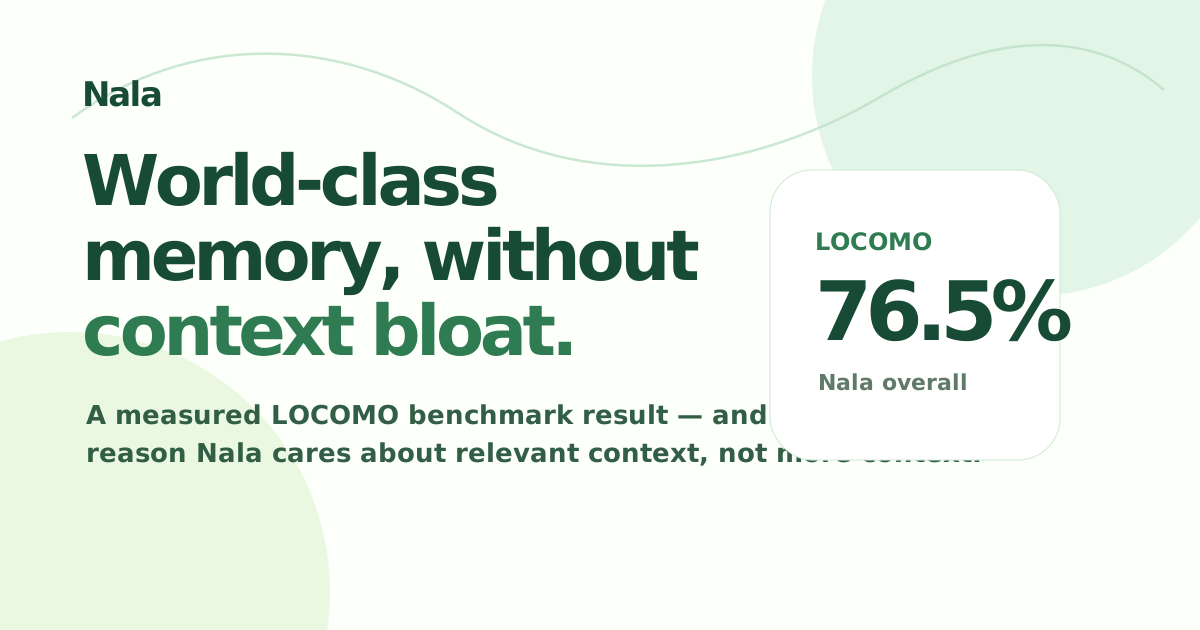
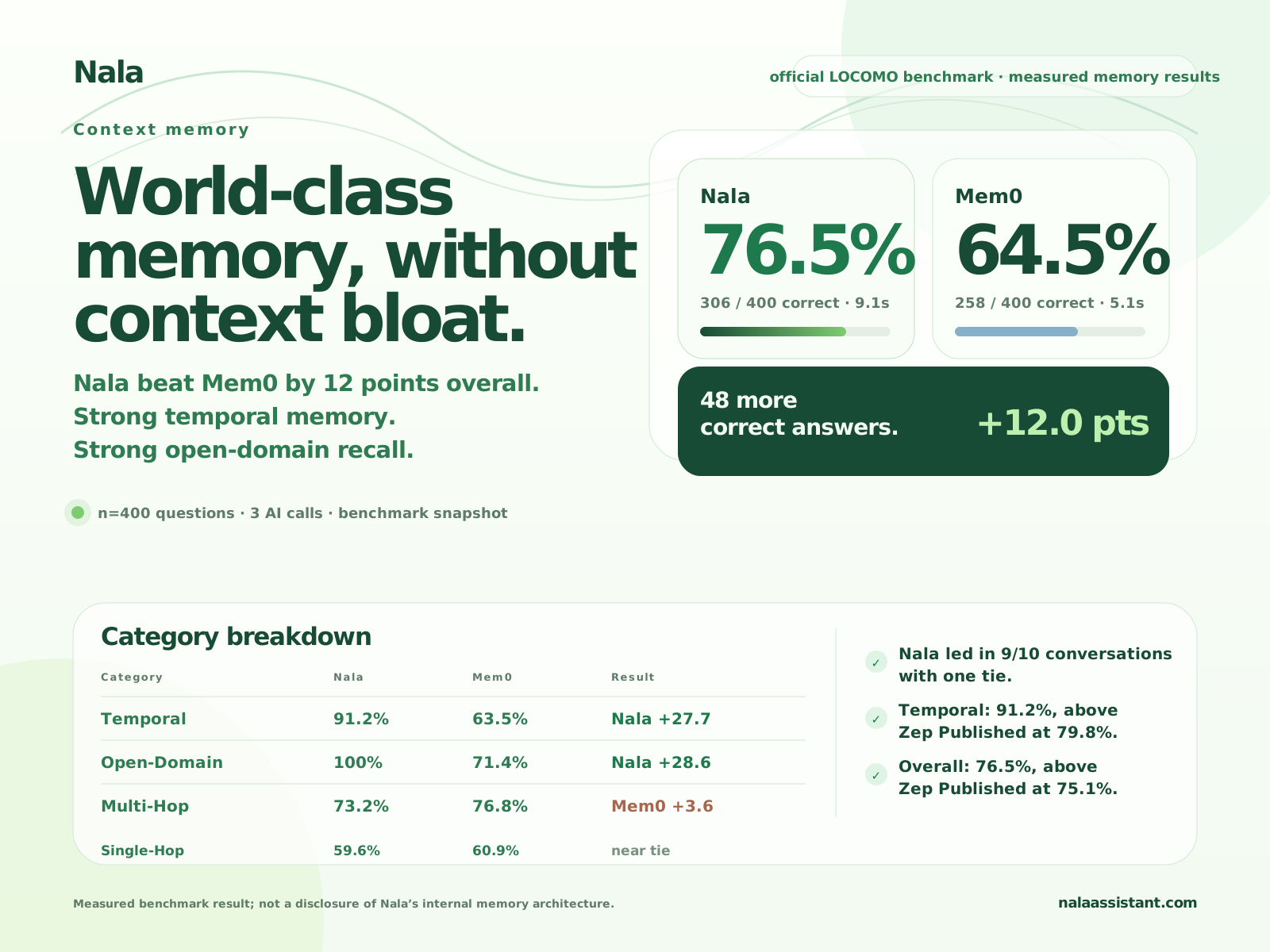
A few months ago, Nala’s memory system was tested on the official LOCOMO benchmark against the leading memory competitor in that run. The result was strong: Nala scored 76.5% overall, compared with 64.5% for Mem0.
That is a 12-point lead. It also means Nala answered 48 more questions correctly out of 400.
The benchmark result
The benchmark snapshot compared Nala and Mem0 across 400 questions. Nala led overall with 306 / 400 correct answers. Mem0 answered 258 / 400 correctly.
The strongest gap was not in a vague “AI is smart” category. It was exactly where a real assistant needs to be useful: remembering when things happened and connecting open-domain information back to the right conversation.
| Category | Nala | Mem0 | Result |
|---|---|---|---|
| Temporal | 91.2% | 63.5% | Nala +27.7 |
| Open-Domain | 100% | 71.4% | Nala +28.6 |
| Multi-Hop | 73.2% | 76.8% | Mem0 +3.6 |
| Single-Hop | 59.6% | 60.9% | near tie |
Why temporal memory matters
A personal assistant lives in time.
It needs to know what happened recently, what was decided earlier, what belongs to the current project, and what should stay quiet because it is no longer relevant.
This is not academic. It is the difference between an assistant that helps you continue and an assistant that makes you re-explain your own life.
On temporal questions, Nala scored 91.2%. The benchmark image also notes this was above Zep Published at 79.8%.
That matters because real work is rarely one clean prompt. It is scattered across tasks, notes, conversations, follow-ups, clients, priorities, and the thing you meant to do yesterday but forgot because a different fire started.
Relevant context beats context bloat
The current AI race often treats context like a storage contest.
Bigger window. More history. More files. More memory. More everything.
But more context is not automatically better context.
If an assistant brings the wrong old detail into a new answer, it gets worse with confidence. If it keeps asking for something it should already know, it feels dumb. If it drags in every memory every time, the user pays for it in latency, noise, and wrong assumptions.
Context bloat
The assistant tries to carry too much at once. Answers get heavier, slower, and easier to pollute with stale information.
Clean context
The assistant works from the right slice: current task, recent activity, stable facts, and the details that actually matter now.
What this means for Nala
Nala is not being built as a memory trophy case.
The goal is not to brag that the assistant can store a pile of facts. The goal is to make everyday work feel less repetitive.
A useful AI personal assistant should be able to reduce questions like:
- Which client or project are we talking about?
- Didn’t I already explain this?
- What was the last decision?
- Is this still relevant?
- Should this become a task, a note, a follow-up, or an agent handoff?
That is the product value of memory. Not “the model saw more text.” The user should feel that Nala understands the shape of the work.
The gap that still matters
The benchmark was not perfect across every category. Mem0 led Nala on multi-hop questions by 3.6 points.
That is useful signal, not something to hide.
Multi-hop memory is hard because it asks the assistant to connect several pieces of information across a longer chain. For a product like Nala, that matters. A founder might mention a client in one conversation, a deadline in another, and a decision three days later. A real assistant should eventually connect those without becoming creepy, noisy, or overconfident.
So the result is encouraging, but not a finish line.
The product lesson
The best AI memory is mostly invisible.
It shows up when the assistant does not ask you to repeat something obvious. It shows up when it remembers the right thing without dragging in ten wrong things. It shows up when it can continue from the current situation instead of treating every message like a brand-new meeting.
That is the bar for Nala.
TODO apps remember work. Nala is being built to understand the work well enough to help move it.
The benchmark result is a strong signal that the direction is real. But the public takeaway is simple:
An AI personal assistant should not need infinite context to be useful. It needs the right context, at the right moment, with enough judgment to leave the rest alone.
Quick answers
What did Nala score on LOCOMO?
Nala scored 76.5% overall in the benchmark snapshot: 306 correct answers out of 400.
Did Nala beat Mem0?
In this measured snapshot, yes. Nala scored 76.5% overall versus Mem0 at 64.5%, a 12-point lead.
What is the product lesson from the benchmark?
Relevant context matters more than simply pushing more context into every answer. A useful AI personal assistant should recall what matters now and leave the rest quiet.
Building toward this: Nala is being built as an AI personal assistant that balances memory, tasks, context, and agent handoff — without making the user babysit every detail. Read more build notes.